
Case Number: 20MST030
Manager: Robert Prosak
Director, IP & Licensing
S&T Technology Transfer & Economic Development
robert.prosak@mst.edu
PDF Download: Additively-Manufactured Structure For Reactionary Processes Marketing Slick
Publication: Additively-Manufactured Structure For Reactionary Processes Publication
Opportunity
Seeking a licensing and development partner to scale toward commercial catalyst manufacturing
Problem Statement
3D-printed catalytic monoliths are typically made by dissolving metal nitrate salts into the printing paste and calcining the structure to form active oxide sites. This nitrate-based approach limits oxide loading to about 10 percent by weight. Higher nitrate concentrations make the paste hydrophobic and unprintable. As a result, low oxide loading limits catalytic performance and holds conversion of light alkanes like methane, ethane, propane, and butane to around 20 percent. A way is needed to print higher-loaded catalytic monoliths that more efficiently convert these light paraffins into higher-value products.
Solution
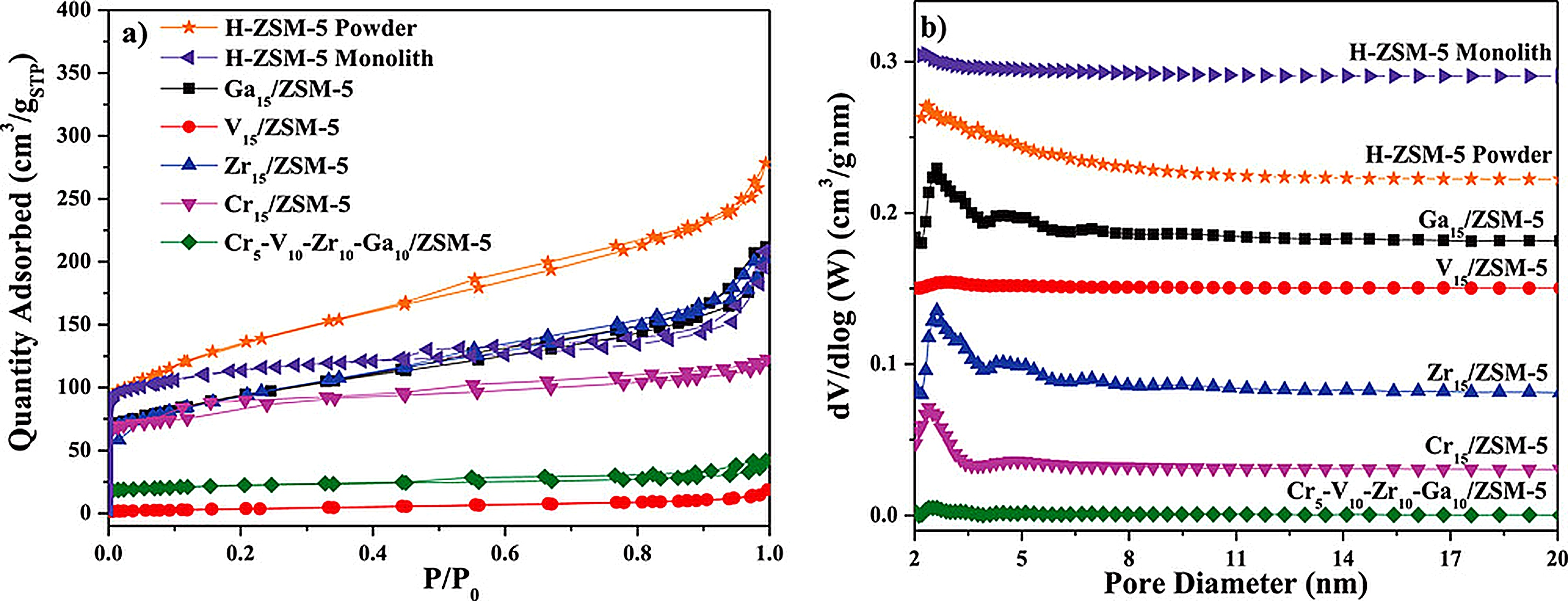
Researchers at Missouri University of Science and Technology developed a new method for 3D printing catalytic monoliths. The method addresses the previous 10 percent ceiling on oxide loading by mixing commercial metal oxide particles such as gallium, zirconium, vanadium, and chromium oxide directly into the printing paste instead of dissolving nitrate salts into it. This keeps the paste printable while allowing higher oxide loading. The pastes are printed layer by layer into self-standing H-ZSM-5 zeolite monoliths and calcined to strengthen the structure. In testing, a mixed metal oxide monolith combining gallium, zirconium, vanadium, and chromium oxide converted about 40 percent of a propane and carbon dioxide feed at 550 degrees Celsius. The monolith reached 95 percent selectivity toward propylene, with no benzene, toluene, or xylene byproducts and no deactivation after six hours of continuous operation.
Value Proposition
This method removes the nitrate solubility limit that capped oxide loading in 3D-printed catalysts. It opens a wider design space for tuning monoliths to specific reactions. The resulting catalysts deliver high olefin selectivity and stable performance without coking, offering a more efficient path for converting
light alkanes into higher-value products like light olefins and syngas.
Development Stage
Validated in the lab.
Intellectual Property
Granted US Patent No. 12,251,758
Inventors
Ali Rownaghi, PhD, Fateme Rezaei, PhD and Shane Lawson, PhD
Follow Technology Transfer and Economic Development