
Case Number: 25MST027
Manager: Robert Prosak
Director, IP & Licensing
S&T Technology Transfer & Economic Development
robert.prosak@mst.edu
PDF Download:Carbon fiber based additive manufacturing structural battery Marketing Slick
Publication: Coming Soon
Opportunity
Seeking a licensing and development partner to advance from lab validation into prototype manufacturing and commercialization.
Problem Statement
Weight and space are the defining constraints in aerospace, automotive, and portable electronics design. Structural components and battery packs are built separately today, competing for the same grams and cubic centimeters. Existing structural battery designs attempt to solve this but force a trade-off between mechanical strength and energy performance. They are also locked into flat, planar geometries, which severely limits where they can be used.
Solution
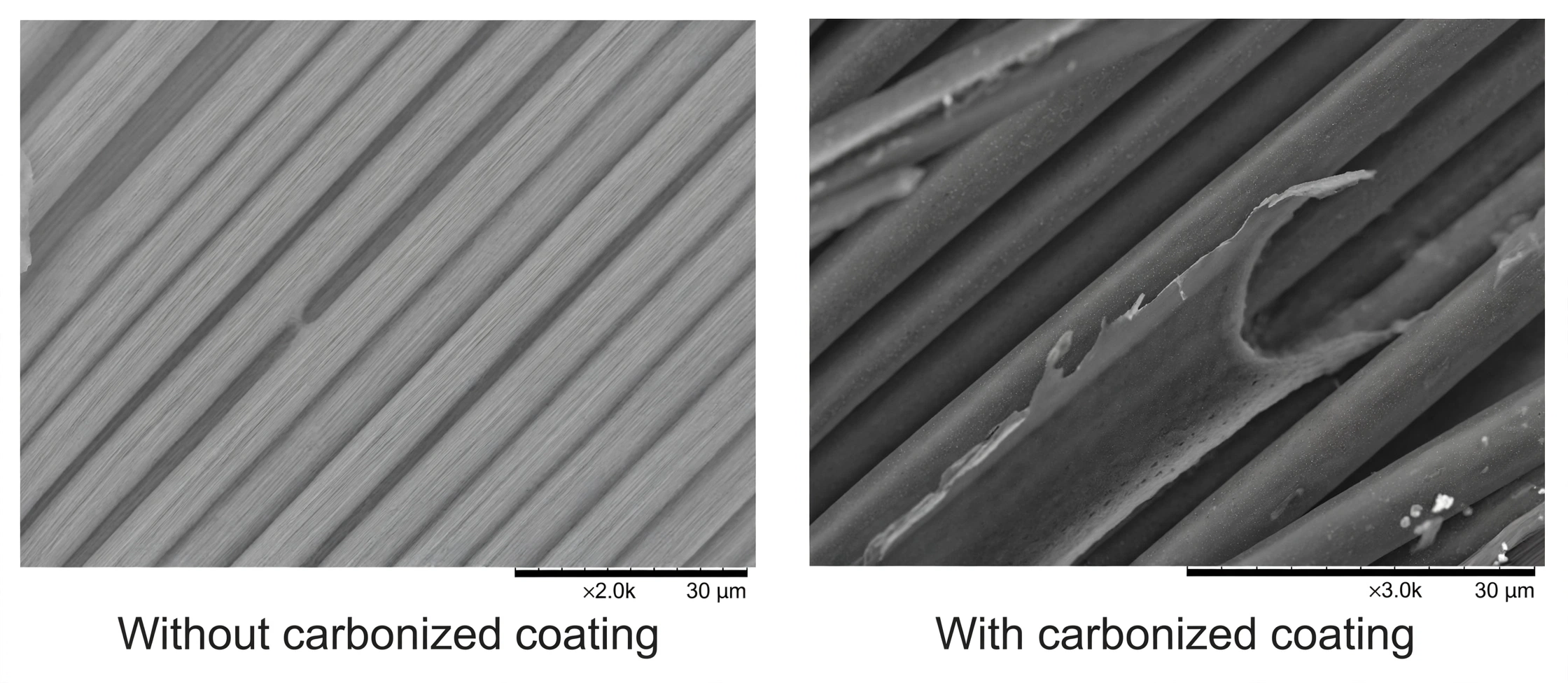
Researchers at Missouri University of Science and Technology have developed a method for fabricating structural batteries in virtually any three-dimensional shape through a layer-by-layer assembly process. Carbon fiber serves three roles at once as the current collector, structural reinforcement, and active anode material. Layers are laser-cut to shape, then bonded into a single rigid unit by injecting a polymer binder through a grid of precision-drilled holes. A carbonized coating on the carbon fiber mats improves inter-fiber bonding, electrical conductivity, and cycle-to-cycle capacity.
Value Proposition
Replacing passive structural components with energy-storing ones raises effective system energy density without adding weight or volume. The process builds on conventional battery fabrication techniques and standard materials, lowering the barrier to commercialization. Geometry flexibility means the same technology serves multiple markets with minimal redesign.
Development Stage
Validated in the lab. Bonded multi-layer cells have been fabricated and electrochemically characterized, with stable discharge capacity confirmed across cycles and mechanical bonding demonstrated across multiple geometries.
Intellectual Property
Provisional Patent Application Filed
Inventors
Jonghyun Park and Jacob Sutton
Follow Technology Transfer and Economic Development