
Case Number: 24MST008
Manager: Robert Prosak
Director, IP & Licensing
S&T Technology Transfer & Economic Development
robert.prosak@mst.edu
PDF Download: Functionally Graded Viscoelastic Polymer Marketing Slick
Publication: Functionally Graded Viscoelastic Polymer Publication
Opportunity
Seeking a licensing and development partner to scale viscoelastic helmet and armor liners into manufacturing.
Problem Statement
Blast waves cause traumatic brain injury even when a helmet stops fragments and impact. Standard helmets do little to dampen the pressure waves that reach the head. Warfighters exposed to repeated low-level blasts remain at risk. There is a need for a liner material that absorbs and redirects blast energy without adding bulk to existing helmets.
Solution
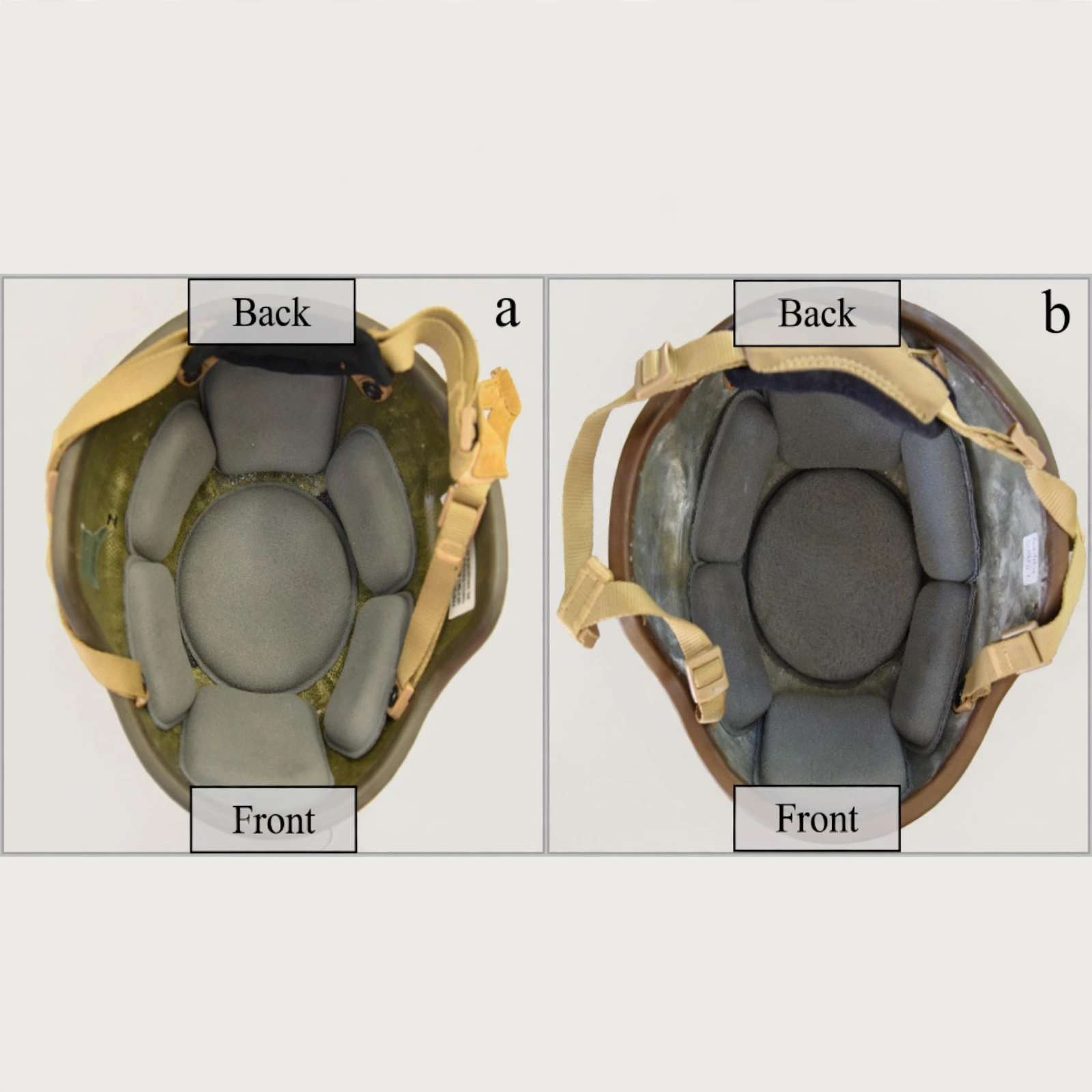
Researchers at Missouri University of Science and Technology developed functionally graded viscoelastic polymer liners for helmets and body armor. The liners use polyurethane and silicone materials, some of which contain graphene nanoparticles. These materials convert blast-wave energy into heat across the
10-300 Hz range. In manikin blast testing, a helmet fitted with the liner lowered peak pressure and impulse on the head compared to a standard helmet. Layering viscoelastic materials was effective, having waveform patterns similar to the material of the external layers with reduced peak pressures of up to 16%, achieving increased energy dissipation efficiency.
Value Proposition
The liner retrofits into existing helmets and armor without redesign. It targets the blast pressures most linked to brain injury. Material composition and thickness can be tuned for the threat. This offers a practical path to safer head protection for soldiers and others in high-blast environments.
Development Stage
Validated through manikin blast testing and laboratory shock tube experiments.
Intellectual Property
US Application No. 18/800,400
Inventors
Fatih Dogan, PhD, Cody Thomas, PhD, Melissa Sutter, PhD, and Catherine Johnson, PhD
Follow Technology Transfer and Economic Development