
Case Number: 26MST023
Manager: Robert Prosak
Director, IP & Licensing
S&T Technology Transfer & Economic Development
robert.prosak@mst.edu
PDF Download: Hybrid System for Valuable Metals Recovery for Various Feedstocks Marketing Slick
Publication: Hybrid System for Valuable Metals Recovery for Various Feedstocks Publication
Opportunity
Seeking a licensing and development partner to advance the system toward pilot-scale demonstration and commercialization.
Problem Statement
Electronic waste holds valuable metals and critical materials that are difficult to recover at high purity. Conventional recycling lines rely on shredding, magnetic separation, and eddy current sorting as separate steps. These methods struggle to handle fine, liberated particles. The result is low-purity yields and streams contaminated with the wrong material, such as metals trapped in plastics. The industry needs a single integrated process to separate complex feedstocks into clean material streams.
Solution
Researchers at Missouri University of Science and Technology have developed a hybrid system that combines mechanical liberation, electrostatic charging, air classification, magnetic separation, and froth flotation into a single continuous process. Feed material first passes through a hammer chamber that liberates the various components while limiting excessive grinding that hampers downstream sorting. The liberated particles then pass through a high-speed charging stage that imparts distinct electrical charges based on their composition. The charged particles are split into three streams and further refined through air classification, magnetic separation, and
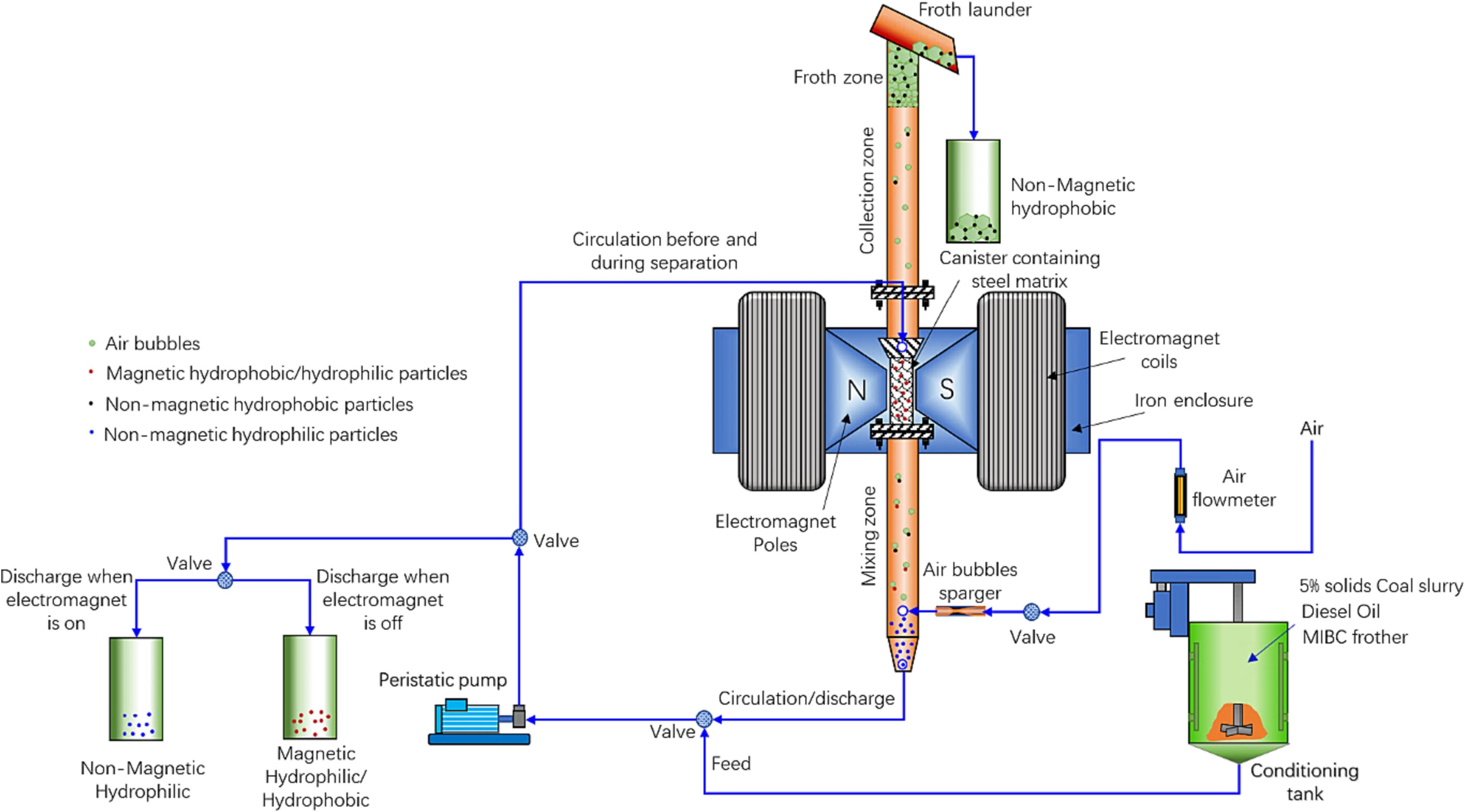
a hybrid magnetic flotation column that captures particles based on both magnetic and hydrophobic properties in a single unit. The system also recovers particles smaller than ten microns that are normally lost as hazardous dust in standard operations.
Value Proposition
By combining five separation principles into one continuous line, the system replaces a string of standalone machines with a single integrated process. It targets materials that conventional separators cannot distinguish by size or density alone, such as different
plastics or nonferrous metals, and it recovers fine fractions that are usually lost as waste. The result is higher recovery, higher output purity, and lower environmental risk associated with processing electronic waste and other complex feedstocks.
Development Stage
Validated in the lab.
Intellectual Property
Provisional Patent Application Filed
Follow Technology Transfer and Economic Development