
Case Number: 24MST041
Manager: Robert Prosak
Director, IP & Licensing
S&T Technology Transfer & Economic Development
robert.prosak@mst.edu
PDF Download: PISA Printing soluble solids using Stereolithography Marketing Slick
Publication: PISA Printing soluble solids using Stereolithography Publication
Opportunity
Seeking a licensing and development partner to advance PISA Printing toward commercial use in tissue engineered vasculature, dissolvable drug delivery devices, and other advanced manufacturing applications.
Problem Statement
Growing living tissue by 3D printing depends on building a vascular network fine enough to feed every cell. Extrusion-based bioprinters build that network point by point, but their slow speed and low resolution make this difficult. Digital light processing (DLP) printers cure an entire layer at once and offer much better speed and resolution. Current DLP resins rely on chemical crosslinkers that permanently lock the printed part in place. As a result, they cannot be dissolved or reshaped after printing, which limits their use for fine vascular channels, dissolvable microneedles, and other structures meant to disappear once they have done their job.
Solution
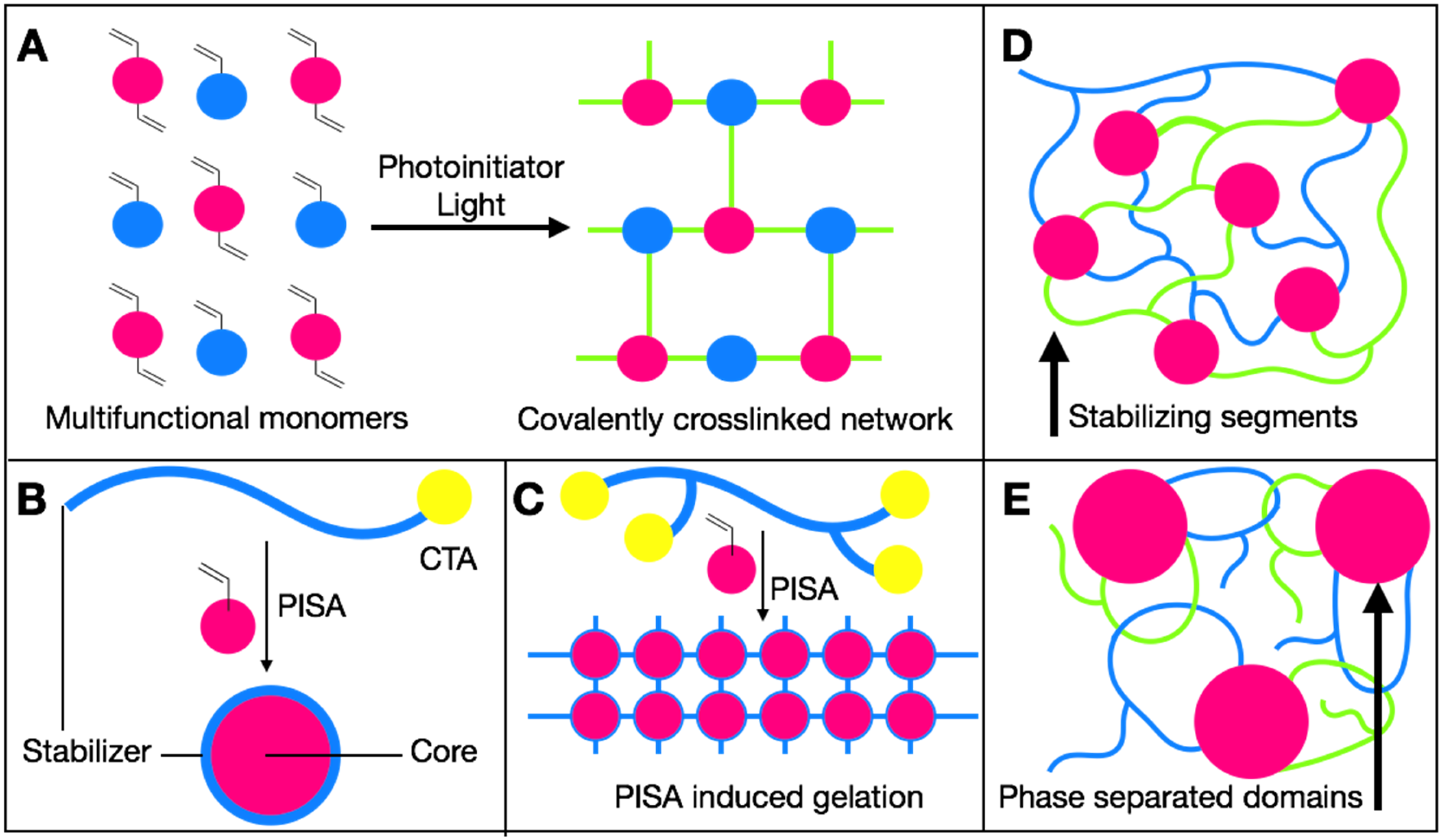
Researchers at Missouri University of Science and Technology have developed PISA Printing to address the challenge of holding DLP-printed parts together without chemical crosslinkers. The method combines polymerization-induced self-assembly (PISA) with DLP 3D printing. Instead of chemical crosslinkers, the resin uses a multi-CTA functional scaffold that holds the printed part together through physical crosslinks formed by interparticle bridging and knotting. These physical crosslinks give the part enough strength to keep its shape during printing, but the part still dissolves cleanly in a suitable solvent once printing is done. The team has demonstrated this approach across several resin chemistries, including acrylamide, diacetone acrylamide, and isobornyl acrylate, and has shown that dissolution rate can be tuned through resin composition. Printed microneedles have reached tip features near 27 microns, close to the resolution limit of a standard DLP printer. Researchers have also cast sacrificial microfilaments printed this way inside a biocompatible matrix and dissolved them, leaving open, perfusable channels 100 to 150 microns wide.
Value Proposition
PISA Printing addresses a key limitation in DLP 3D printing: parts that hold together during printing and dissolve cleanly afterward, with no permanent chemical crosslinks. That opens the door to fine vascular networks for tissue engineering, dissolvable microneedles for drug delivery, and sacrificial molds for casting fine features in other materials. The scaffold can be made in a one-pot process from commercially available reagents with no purification step, keeping the platform simple to reproduce and scale.
Development Stage
Validated in the lab across multiple resin systems.
Intellectual Property
Provisional Patent Application Filed
Inventors
Anthony J. Convertine, PhD and Aaron Priester, PhD
Follow Technology Transfer and Economic Development