
Case Number: 18MST005
Manager: Robert Prosak
Director, IP & Licensing
S&T Technology Transfer & Economic Development
robert.prosak@mst.edu
PDF Download: Zeolite Monolith Compositions And Methods For The Catalytic Cracking Of Alkanes Marketing Slick
Publication: Zeolite Monolith Compositions And Methods For The Catalytic Cracking Of Alkanes Publication
Opportunity
Seeking a licensing and development partner to scale into commercial catalyst manufacturing.
Problem Statement
Catalytic cracking of light alkanes such as n-hexane produces light olefins for the plastics and petrochemical industry. Zeolite catalysts like ZSM-5 and HY are industry standards for this reaction, but their narrow micropores restrict diffusion, limit activity and selectivity, and shorten catalyst lifetime. Coke
formation further blocks active sites and accelerates deactivation. The industry therefore needs a zeolite catalyst structure that overcomes these limits while remaining simple to manufacture at scale and effective for this reaction.
Solution
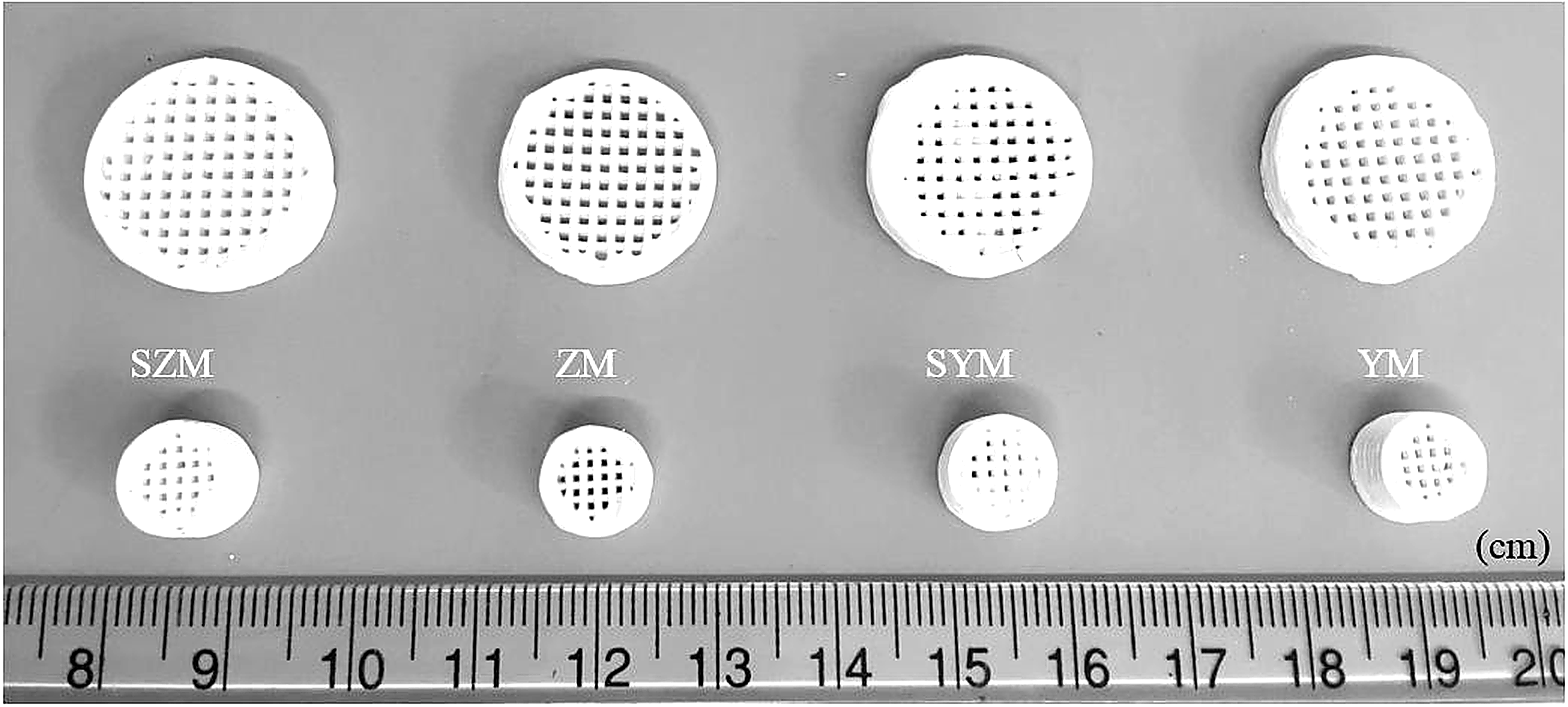
Researchers at Missouri University of Science and Technology have developed a 3D printing method for zeolite catalysts in honeycomb-shaped monoliths with interconnected channels. The printed HZSM-5 and HY monoliths combine micropores, mesopores, and macropores in a single structure, shortening the path to active sites. A silicoaluminophosphate coating can also be grown on the monolith surface to tune acidity and selectivity. In n-hexane cracking tests, the HZSM-5 monolith held steadier activity and higher light olefin selectivity than the powder form, reaching 53.0% selectivity at 650°C. The HY monolith reached 57.9% light olefin selectivity at 600°C, and adding the coating pushed BTX selectivity to 27.5%.
Value Proposition
The printed monolith structure addresses the challenge of mass transfer while preserving the microporosity that drives catalytic activity. This enables more stable conversion, higher and more controllable selectivity to light olefins or BTX, and a manufacturing process that can be scaled and
customized by adjusting the print geometry or the surface coating.
Development Stage
Validated in the lab.
Intellectual Property
Granted US Patent No. 11,192,094
Inventors
Ali A. Rownaghi, PhD, Xin Li, PhD and Fateme Rezaei, PhD
Follow Technology Transfer and Economic Development